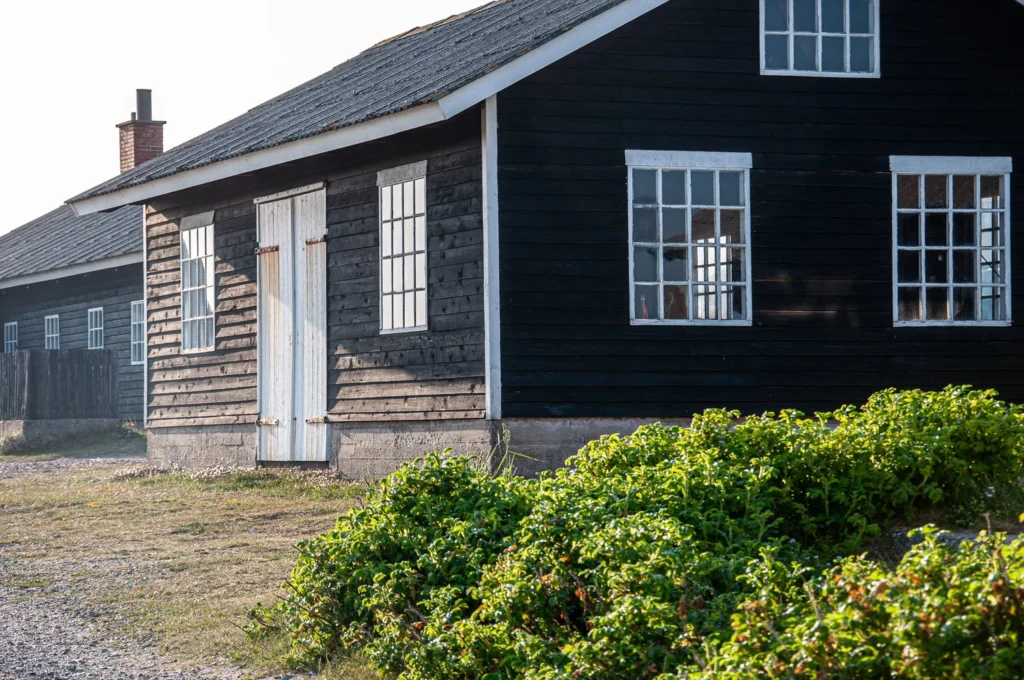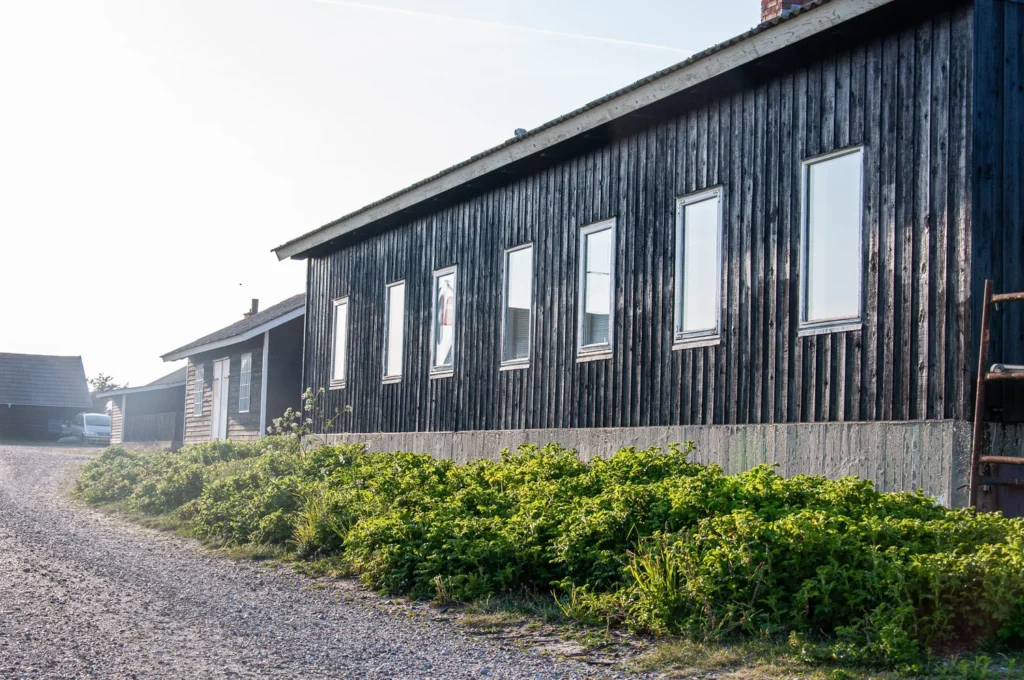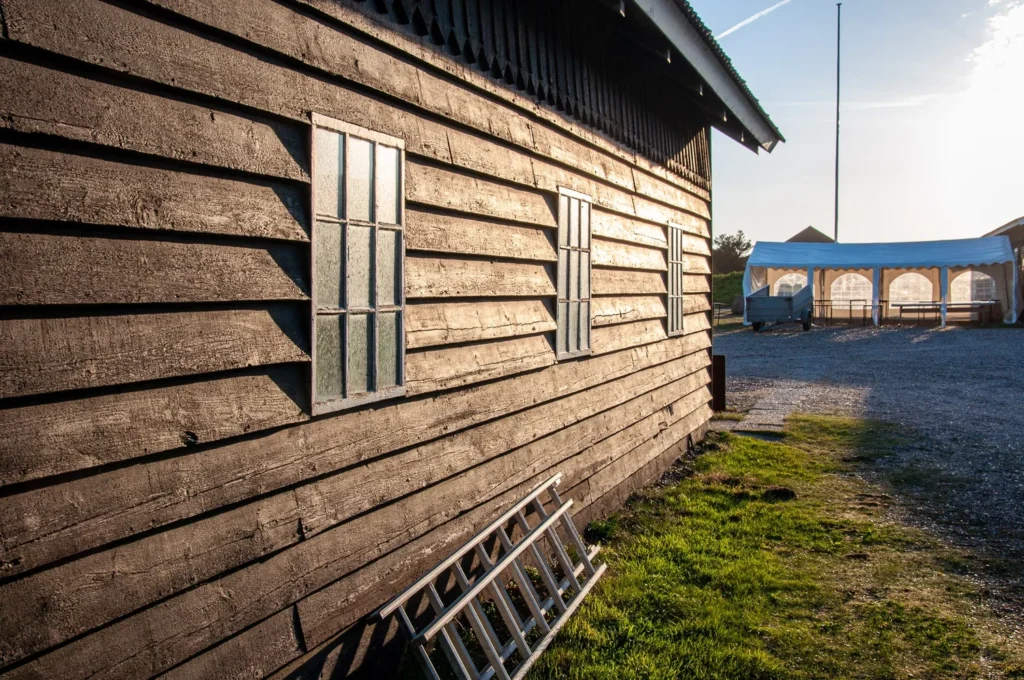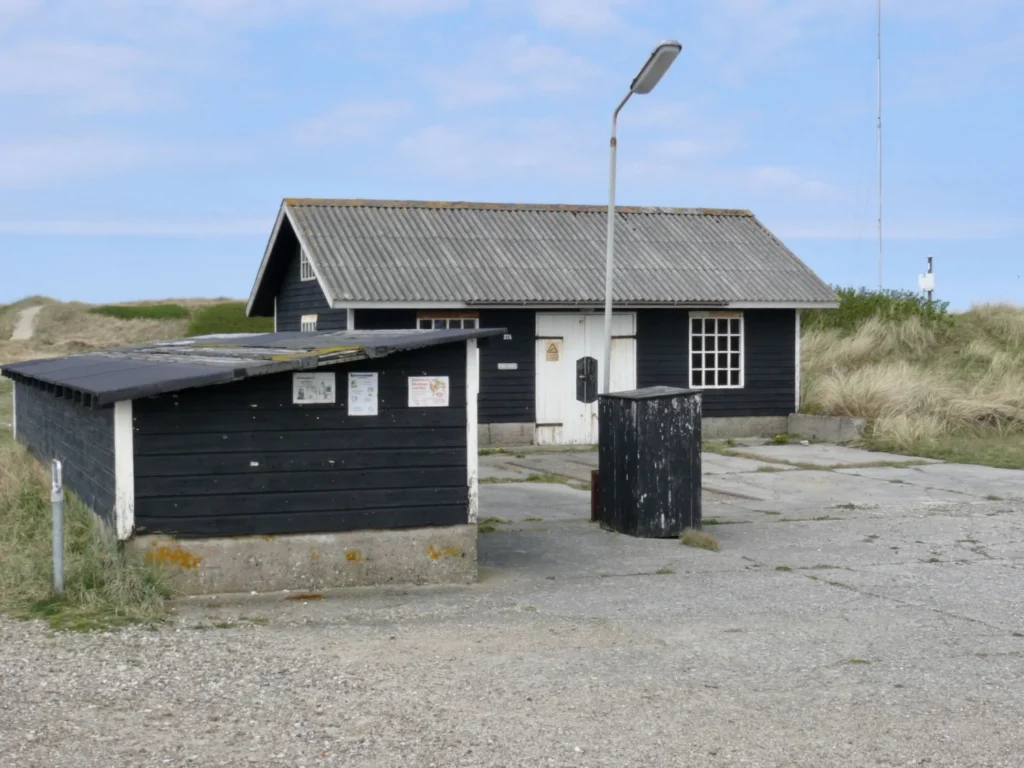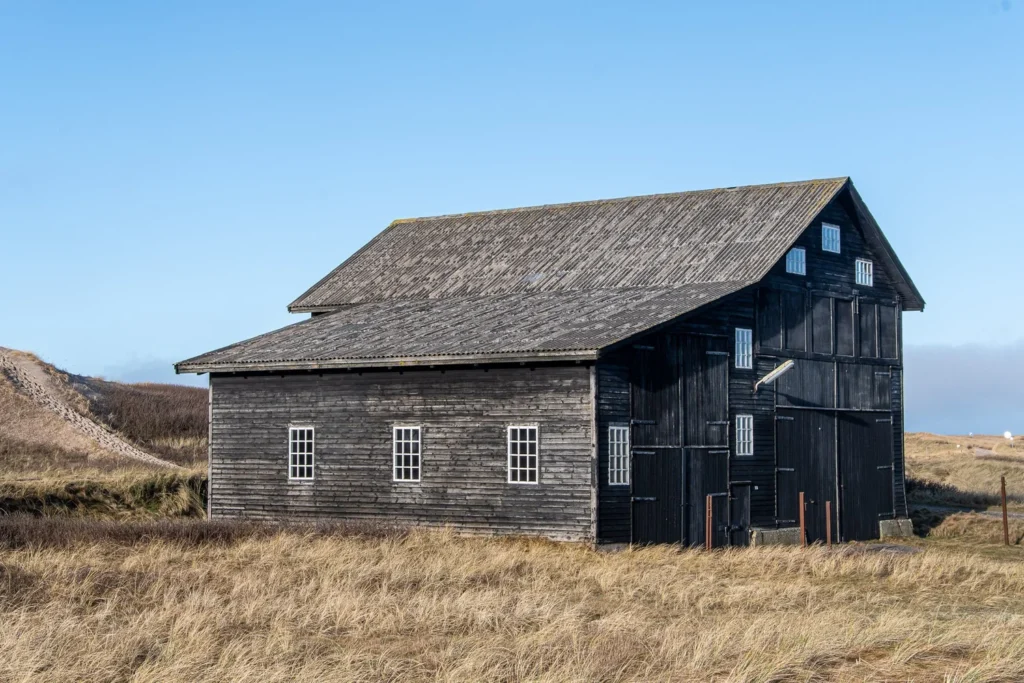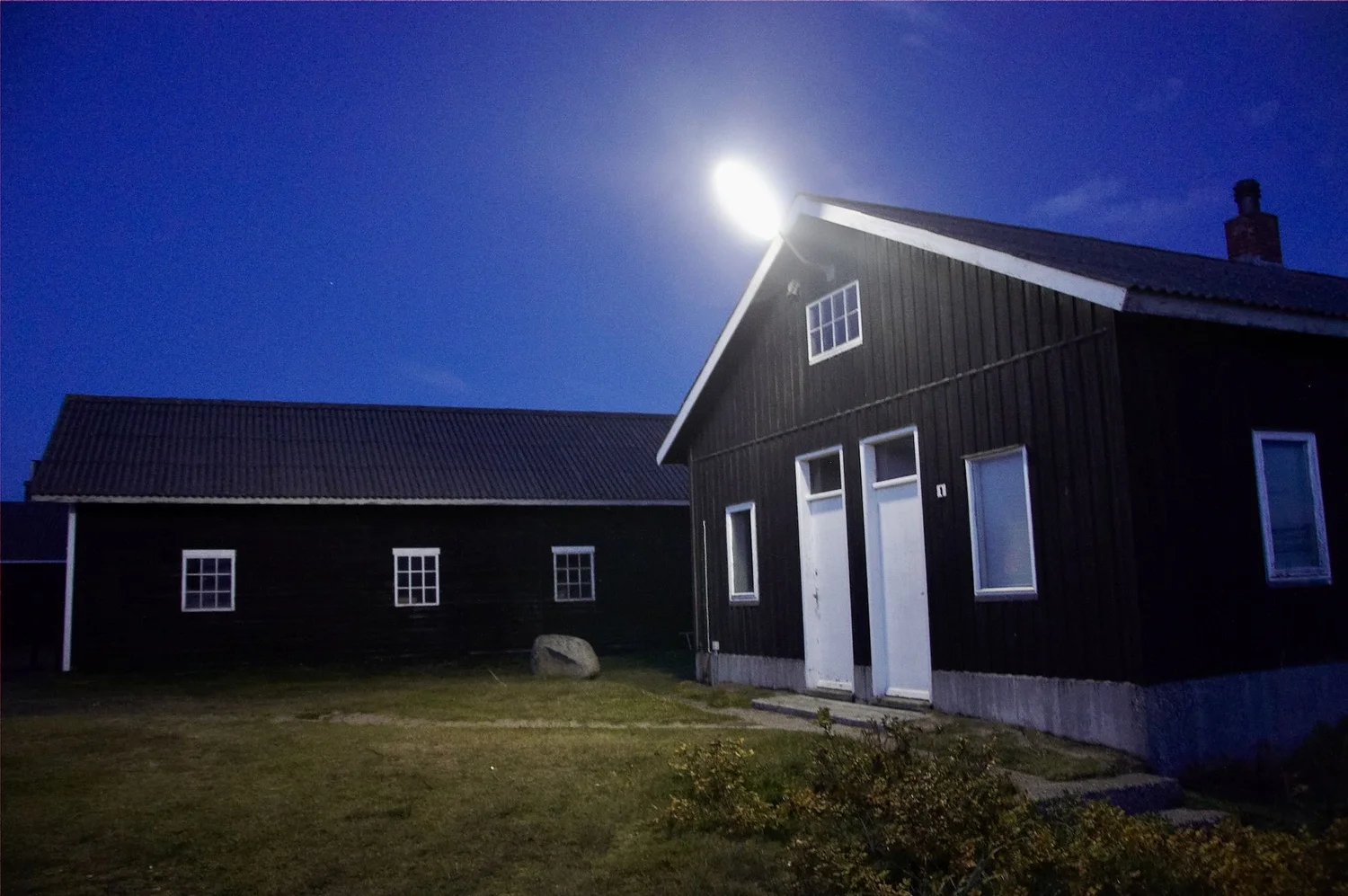
In Agger, you can find the beautiful old wooden houses that were the workplace of the Water Construction Department.
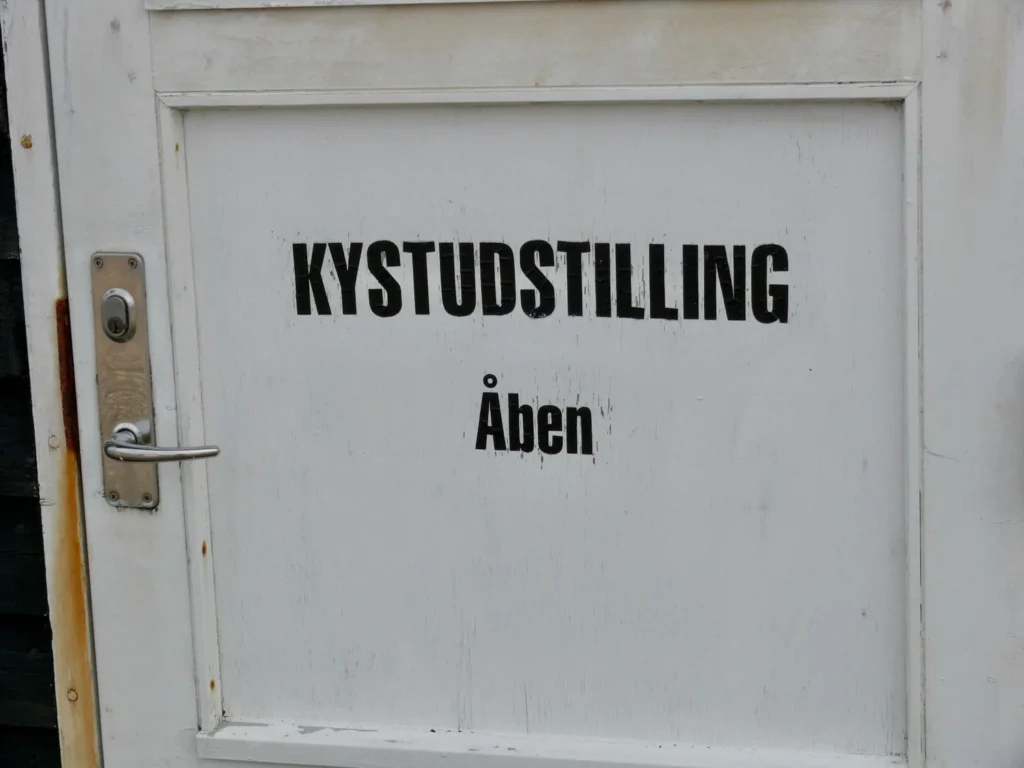
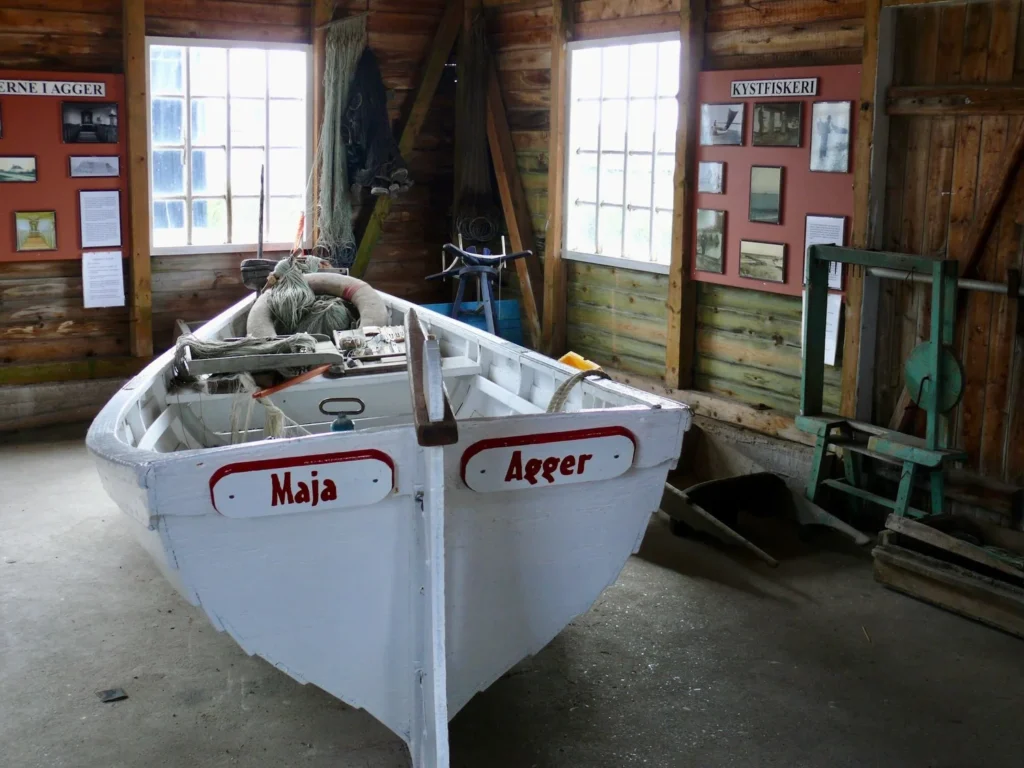
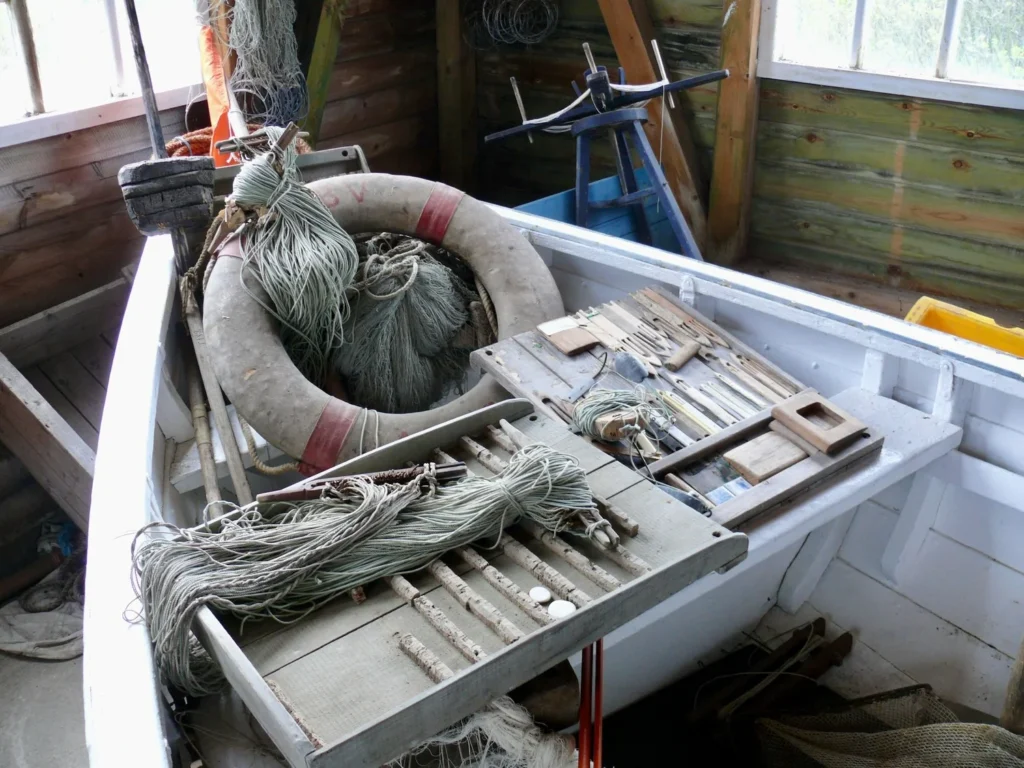
The Vandbygningsvæsen was responsible for the coastal protection work around Agger. They had various workshops in the Black Houses, and the materials were transported to the mounds by rail. The houses house a small exhibition, among other things.
Coastal protection at Agger
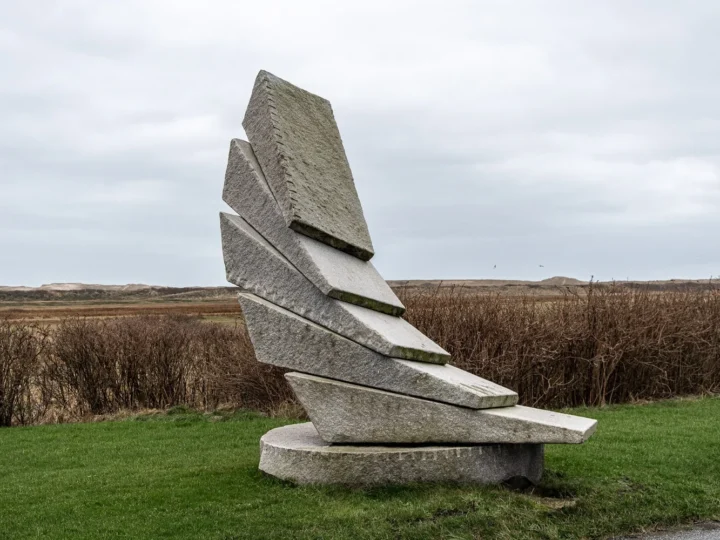
Throughout history, the sea has contributed to major erosion along the west coast, and just over 100 years ago, systematic efforts began to secure the coast against this erosion. In the late 1800s, attempts were made to build groynes, but the first constructions were too weak and were quickly destroyed by storm surges. From 1900 to 1908, 29 more solid mounds were built perpendicular to the coast at Agger. The purpose of these groynes is to break the current and reduce the sea's ability to erode the coast. They vary in length from 220 to 385 meters, while the extra strong deck pier at Thyborøn Canal stretches 800 meters.
The hydraulic engineering department
Coastal protection was a major task that was often challenged by the forces of nature. The hydraulic engineering department was responsible for both coastal protection and port facilities, and the work was controlled from wooden buildings in Thyborøn and Agger. Here there were workshops and depots for the trains that transported building materials, and the elements used in the constructions were also cast here.
The Black Houses
Some of the original wooden houses from the time of the Water Construction Authority still stand in Agger and are known as the distinctive "Black Houses." These houses, which today house an exhibition about Agger's history and coastal protection, were originally painted red, but have since been painted black. A narrow railroad was built along the coast and onto the mounds, which made it possible to transport building materials to the construction sites. Cranes were used to position the heavy elements correctly on the mounds.
The workforce
During the large coastal protection projects, many local people were employed. For them, the work was an important source of extra income alongside fishing. In addition, there were the so-called "West Sea brushes," traveling workers who specialized in coastal protection projects and followed wherever there was work to be found. Even children were involved in early mound construction, hammering nails into the piles that would be driven into the seabed. These nails were used to protect the piles from pile worms and some children could drive up to 10,000 nails a day.
Coastal protection today
Although the many efforts to protect the coast have yielded good results, there is still a need for ongoing maintenance and reinforcement of the facilities. Beach nourishment is one of the measures used today in exposed areas such as the southern tip of Agger Tange, where sand is added to slow down the continued erosion of the sea. In other words, coastal protection is a continuous effort to protect the west coast of Denmark.