The beautiful village church with its dramatic history
Agger Church has a long and dramatic history that is closely linked to the rugged landscape of the North Sea. The original church was built in the Middle Ages, probably sometime between the 12th and 13th centuries, in the Romanesque style, featuring simple stone structures and minimal ornamentation—a typical feature of Danish village churches at that time. This first church was located closer to the coast and served for several centuries as an important religious center for the small community.
However, the local area, including the church, was exposed to the constant threat of coastal erosion, which is a well-known problem along the Danish west coast. Over time, it became clear that the sea was gradually eroding the coastline and coming ever closer to the church. The original Agger Church could not be saved, and in 1834, it was decided to abandon it due to the imminent danger that it would be swallowed up by the sea.
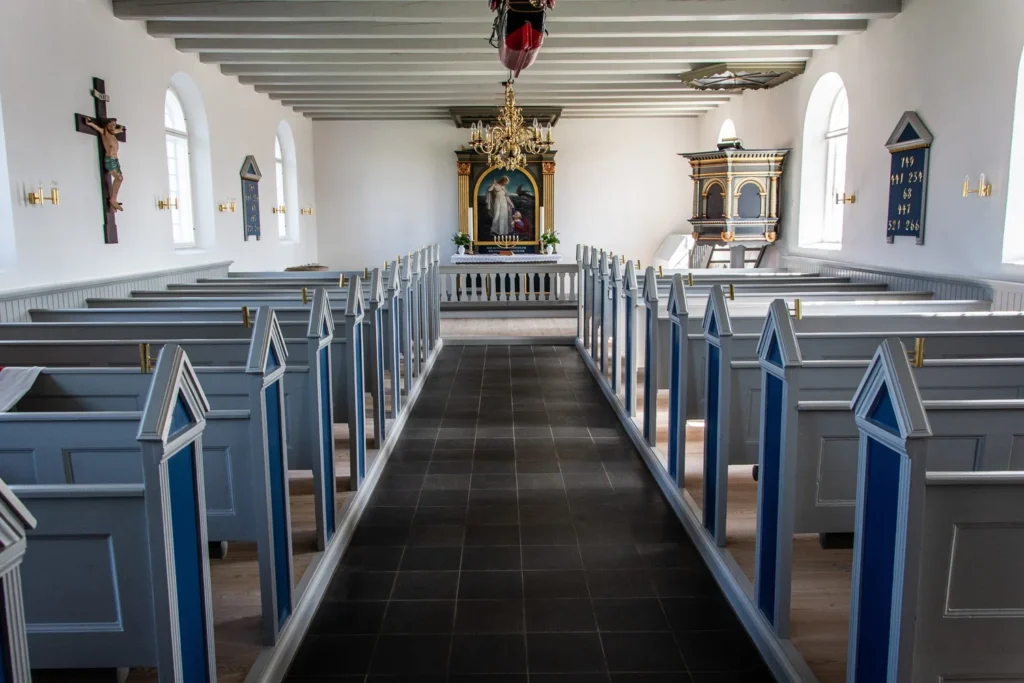
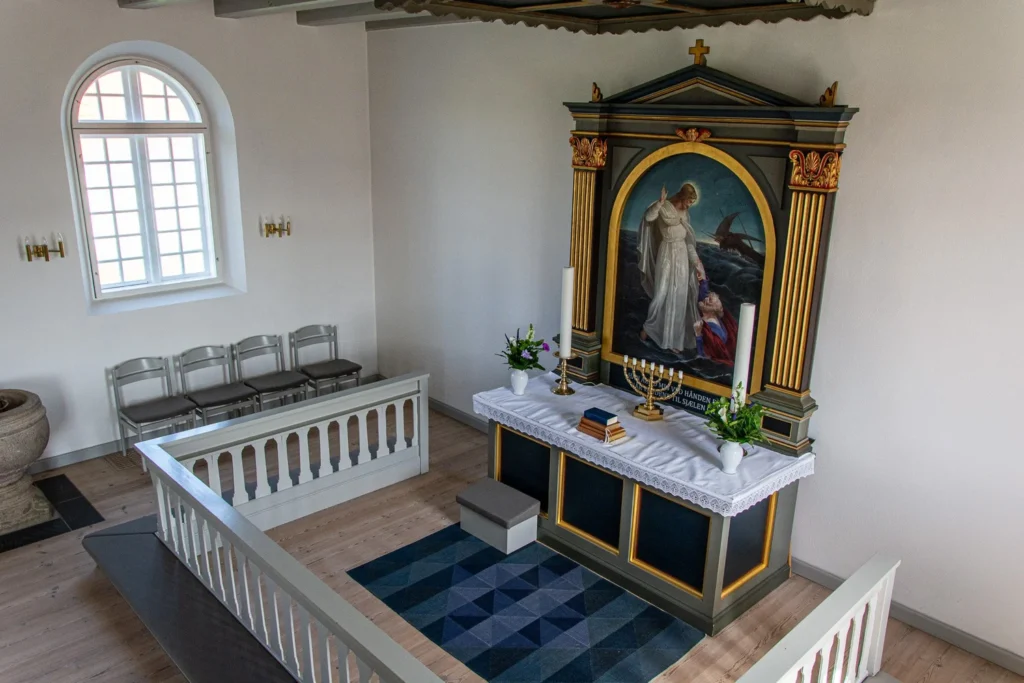
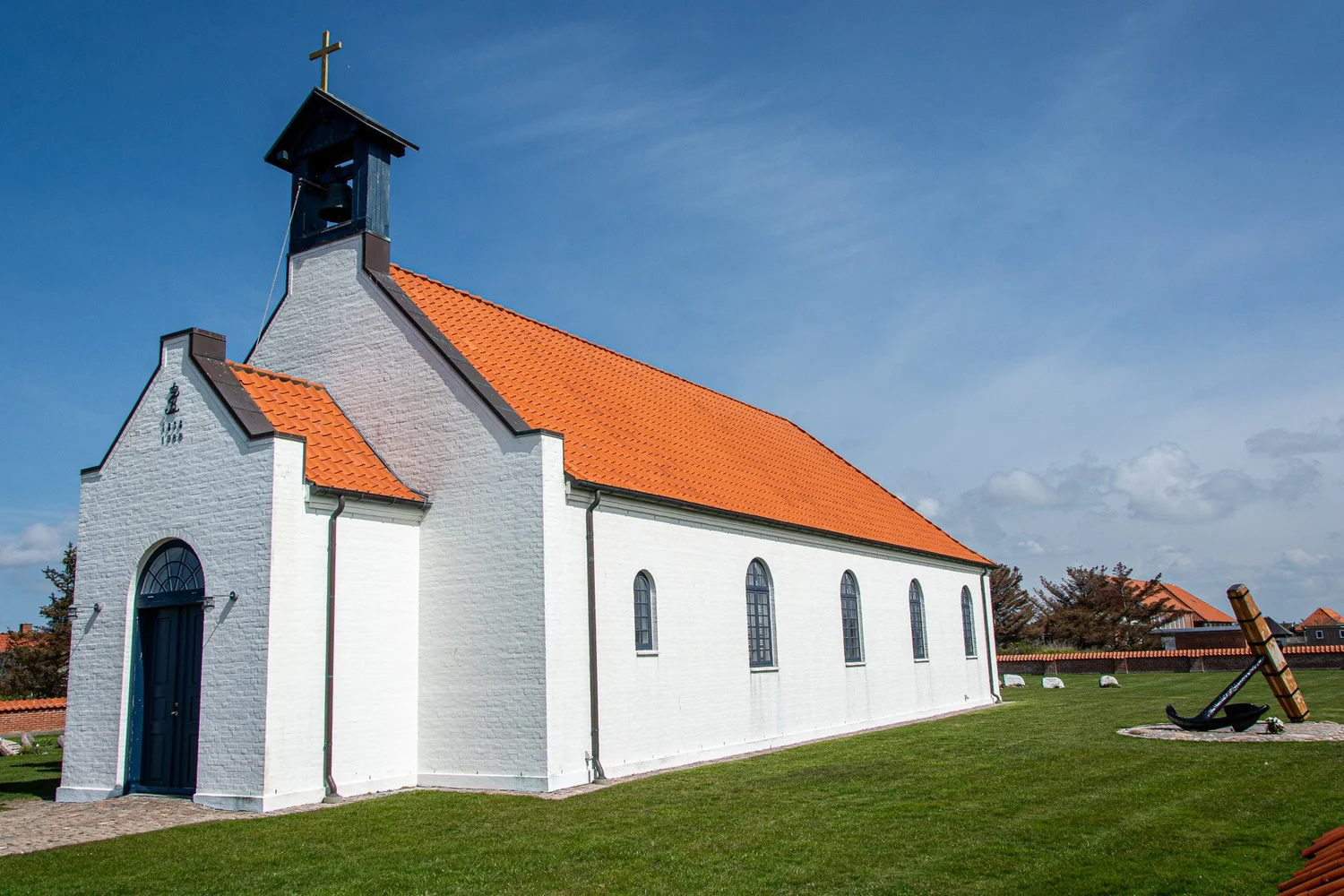
Instead, a new church was built further inland, which was completed in 1838. The new Agger Church was built with whitewashed walls and a red-tiled roof, typical of many Danish village churches. This church was designed in a simpler and more contemporary style, but with the same purpose: to serve as a gathering place for the local community.
The relocation of the church is a testament to the challenges that residents along the West Coast have had to face throughout history. The current Agger Church stands as a symbol of both the area’s religious history and the resilience the coastal community has shown in the face of the forces of nature. The church’s surroundings, including a small, simple cemetery, reflect the peaceful and reverent atmosphere that characterizes the church today.
Although the original medieval church is no longer standing, its history lives on in the current church, which continues to serve as an important cultural and religious gathering place in Agger.